
EMI-Dichtungen – leitfähige Silikon/Gummi-Kombination
Kundenspezifische EMI-Abschirmdichtungen, EMI/RFI-Dichtungen, und andere EMI-Management-Dichtungen werden von LGDSilicone aus verschiedenen leitfähigen Gummi-/leitfähigen Silikon-EMI-Abschirmmaterialien nach Spezifikation hergestellt.
Was sind EMI-Dichtungen??
EMI-Dichtungen schließen den Raum zwischen zwei Passflächen. Sie, wie andere Formen von Umweltdichtungen, Die äußere Umgebung abdichten oder einschließen, um Leckagen zu vermeiden. EMI-Dichtungen unterscheiden sich dadurch, dass sie auch gegen leitungsgebundene oder abgestrahlte EMI abdichten, die die Elektronik stören können.
EMI-Dichtungen aus elektrisch leitfähigen Elastomeren wie Silikon oder Fluorsilikon sorgen für eine Abdichtung gegen Umwelteinflüsse, Wärmedämmung, und Abschirmung gegen elektromagnetische Störungen (EMI). Silikon ist im Allgemeinen eher ein elektrischer Isolator als ein elektrischer Leiter, Der Einschluss von Metall oder metallbeschichteten Partikeln sorgt jedoch für die erforderliche elektrische Leitfähigkeit.
4 Verschiedene Arten von EMI-Abschirmdichtungen
Je nach Verwendungszweck bieten wir vier verschiedene Arten von Dichtungen an.
Diese Materialien haben deutliche Vorteile und eignen sich am besten für bestimmte Anwendungen. Bei der Auswahl, Berücksichtigen Sie die Abschirmleistung, Kompressionskräfte, Materialverträglichkeit, Korrosionsschutz, Kompressionssatz, Kompressionsbereich, Kompressibilität, und Umweltabdichtung.
Form-in-Place
Die Form-in-Place-Dichtung ist eine Lösung zur Abschirmung elektromagnetischer Störungen, die automatisch und mit minimalem manuellen Aufwand verteilt werden kann.
Weil die FIP-Dichtung automatisch angebracht wird, Ein grundlegendes CAD-Modell kann in das Ausgabesystem programmiert werden, um den genauesten Weg für die Dichtung festzulegen, Dadurch wird der Bedarf an manueller Arbeit vermieden und menschliche Fehler während des Dosiervorgangs werden verhindert.
Stoff über Schaumstoffdichtungen
Stoff über Schaumstoff (FOF) Dichtungen sind eine ausgezeichnete Wahl für Situationen, in denen weniger Kompressionskraft erforderlich ist. Dabei ist der geringe Kraftaufwand eine seiner nützlichsten Eigenschaften, FOF-Dichtungen sorgen außerdem für eine gute Leitfähigkeit und Schirmdämpfung, Dies macht sie zu einer effizienten Abschirmungsoption für eine Vielzahl von Frequenzen.
Abhängig von der Anwendung, Die Dichtungen können einen großen Toleranzbereich abdecken, Diese Dichtungsform eignet sich jedoch besonders gut für leichte Materialien. FOF-Dichtungen werden häufig zur Abdichtung elektronischer Gehäuse verwendet.
Gestrickte Drahtgeflechtdichtungen
Wird zum Verschließen von Deckeln verwendet, Türen, und andere Gegenstände. Sie haben den Vorteil, dass sie korrosionsbeständig sind, Abrieb, und hochtemperaturbeständig. Außerdem, sie sind sehr belastbar, withstanding wear and tear over time.
When you require good EMI/RFI shielding as well as low-frequency magnetic shielding, use knitted wire mesh gaskets.
EPDM Silicone Gaskets
EPDM (ethylene-propylene-diene-monomer) gaskets are synthetic rubber that may be used in a variety of applications.
Because these gaskets are silicone rubber-based, they are an excellent gasket solution for applications that are subject to environmental climate fluctuations (Z.B., Ozon, climate, sunlight, aging, some types of chemical exposure, usw.), such as those found in the automotive or construction industries. EPDM gaskets perform effectively in a variety of environments, including air, hot water, cold water, and steam.
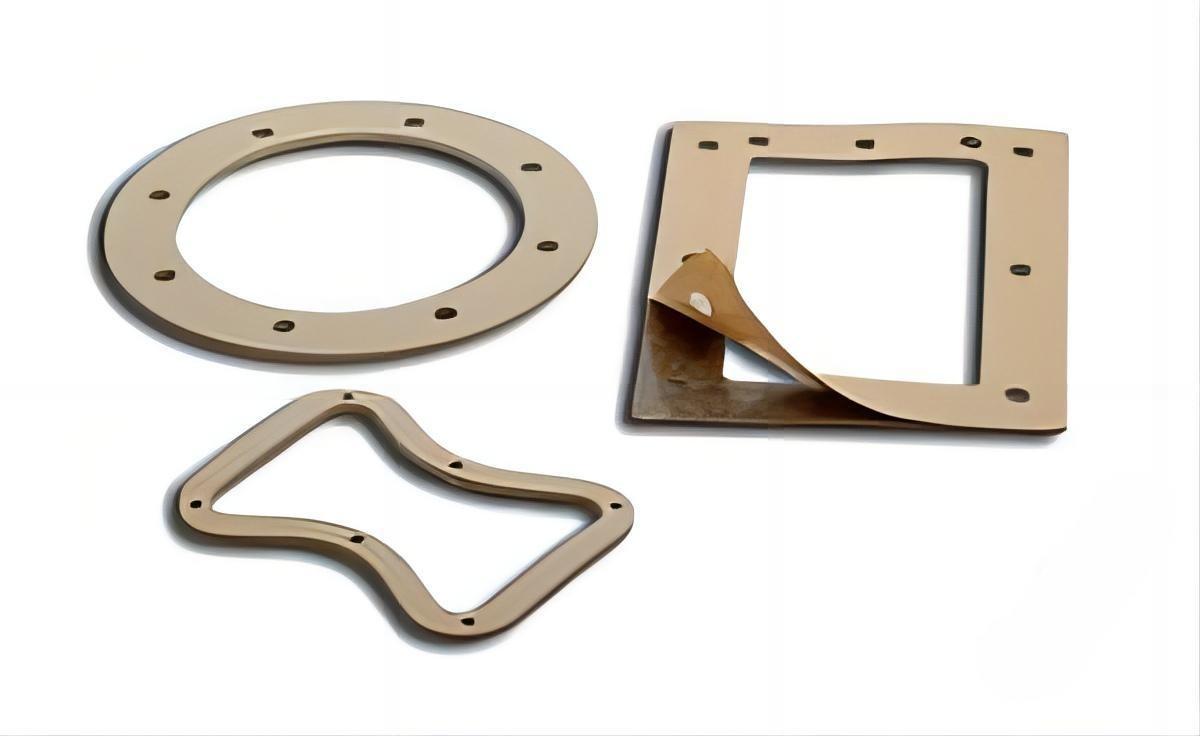
EMI Shield Gasket Construction
Die-cutting, digital die-less fabrication, and pressure-sensitive adhesion are all common methods for creating EMI shield gaskets. Understanding the different manufacturing processes of different gaskets might help you decide which product to buy.
Die-Cut Gaskets
A die-cut method is used to make many gaskets. This entails stamping a piece of rubber and then forming it into a gasket. Die-cut gaskets are a cost-effective way to seal the lid of a high-volume box. Die-cut gaskets can also be used to seal irregular forms.
Digital Die-Less Cutting
Gaskets may be made utilizing a digital die-less cutting technique that maximizes value while minimizing waste. These gaskets can be used in any application where die-cut gaskets are employed. This is an extremely cost-effective manufacturing technique.
Adhesive Pressure Gaskets
Pressure-sensitive adhesives can also be used to create gaskets. This method is commonly used to create O-ring gaskets, framed gaskets, and other specialty gaskets.
Industrial Applications Of EMI Gaskets

EMI shielding gaskets find use in a wide range of industrial applications, einschließlich:
Automotive control systems
Automobiles are progressively integrating electrical and electronic systems, including those for control, navigation, communication, and media, as automotive technology progresses. The location of these many systems in a compact space can produce significant levels of EMI, affecting their performance and functionality. The use of EMI gaskets separates the systems, shielding them from the possible impacts of EMI.
Computers
EMI gaskets protect sensitive computer components from EMI generated by nearby components and ambient sources, avoiding data corruption and maintaining proper operation.
Medizinprodukte.
Because medical devices are frequently utilized in crucial applications such as evaluating and monitoring patient health, they must provide consistent and dependable performance. The use of EMI gaskets guarantees that other electronic and electrical types of equipment do not interfere with the operation of the gadget.
Smartphones
Smartphones, like computers, contain several electronic components packed into a tiny area. EMI from one component can interfere with the performance of another if it is not shielded.
How do gaskets work?
EMI gaskets create a conductive route along seams and other gaps in electronic enclosures. This coating eliminates any differences across the shield surface, resulting in a smooth current flow. Dichtungen, in essence, block all of the holes in a piece of equipment so that EMI radiation does not interfere with functioning.
How thick is an EMI gasket?
Combination EMI / RFI gaskets are typically made in 0.125′′ (3.18mm) and 0.25′′ (6.4mm) thicknesses, while other thicknesses are available upon request.
Contact The Shielding Gasket Experts At LGDSilicone Today
EMI gaskets shield sensitive electrical and electronic devices and systems from electromagnetic interference. We provide high-quality shielding gaskets for industrial applications at LGDSilicone. Contact us or get a quotation to learn more about our EMI gasket products.